- Las Ramblas!
Never mind that a lot of locals shun this sequence of promenades that runs from Plaça de Catalunya down to the Columbus Monument at the waterfront.
If you’re a tourist it’s one of those things that you have to do.
In summer you’ll be under the shade of the tall plane trees and shuffling through the crowds that pass living statues, street performers, bird-sellers and flower stands.
Occasionally you’ll catch the whiff of waffles (gofres) being baked.
Once you get to the water you can keep going along the boards to visit the Maremagnum mall or Barcelona’s Aquarium.
2. Casa Battlo
Another of Antoni Gaudí’s most postcard-friendly creations, this apartment block wasn’t created from scratch but was a remodel undertaken at the turn of the 20th century.
You won’t need to have visited Barcelona to recognise the building’s roof, the tiles of which are the scales of a great dragon.
Like all of his work the inside and outside of Casa Batlló has that sinuous quality, with few straight lines, and dazzling attention to detail.
Take the mushroom-shaped fireplace on the noble floor, which like a cosy grotto was designed for couples to warm up in winter.
3. City Beaches
Barcelona’s beachfront boardwalk stretches for miles. It will take a good hour to get from Barceloneta to Diagonal Mar on foot, but it’s a walk that really helps you understand the city.
The westernmost beaches like Sant Sebastià are busier and more touristy, but are backed by Barceloneta’s tight lattice of trendy shops and bars with terraces and outdoor seating.
As you move along the waterfront after the Olympic Port you’ll find a bit more room and more Barcelona locals.
Finally, just up from Platja de Llevant is the massive and new Diagonal Mar mall, revitalising a former industrial part of the city.
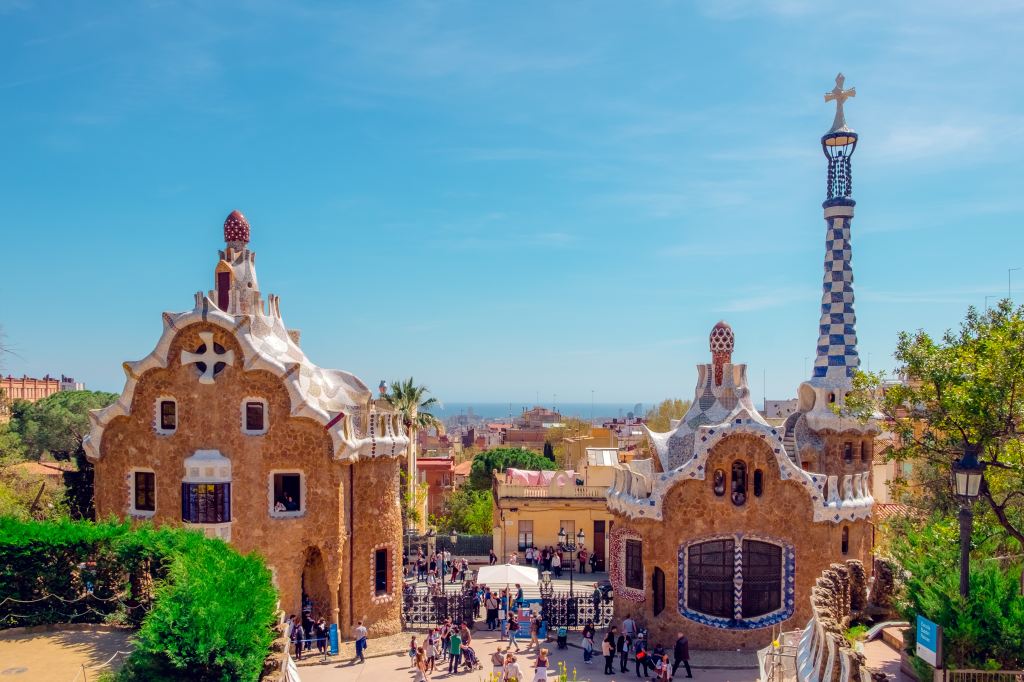
4. Park Güell
Round off your Gaudí experience with a trip to this garden complex on Carmel Hill.
Many make the trip to this part of Gràcia for those gorgeous panoramas over Barcelona from the park’s main terrace.
You’ll have seen these serpentine benches and their mosaics on postcards and in movies.
Elsewhere there are colonnades, fountains and sculptures, all in the architect’s distinctive style.
If you still haven’t had enough Gaudí you can enter his House-Museum, where he lived from 1906 to 1926, with furniture and decorative items designed by him on display.
5. Montjuic
This city district was developed for the 1929 International Exhibition and features several high-profile museums including the National Museum of Catalan Art, the Museum of Archaeology and the Ethnology Museum.
Of those the art museum is particularly recommended, and the views of the city from its steps are stunning.
Below this, and also built for the exhibition was the Magic Fountain, which puts on light and music shows ever half-hour on the weekends. This is best seen at night of course.
At the very top of the hill is the 17th-century fortress, which saw action in the Catalan Revolt in the 1600s as well as during the Civil War in the late-1930s, after which it was a prison.
Author: Sebastian Weber form Budgetizer!
 Budgetizer Barcelona